
 Story by Tamyra Horst



The Columbia Union Conference, established in 1907 to coordinate the Seventh-day Adventist Church's work in Delaware, Maryland, New Jersey, Ohio, Pennsylvania, Virginia, West Virginia and the District of Columbia, is part of the worldwide Protestant denomination of 23 million members in more than 212 countries. At the union level, we connect and provide administrative leadership, governance and support services to our conferences, schools, health care networks and ministries. Each year, our organizations sponsor programs and projects that address human needs, improve quality of life and introduce people to Jesus. Read our Mission, Values and Priorities.
God is love, power, and splendor—and God is a mystery. His ways are far beyond us, but He still reaches out to us. God is infinite yet intimate, three yet one,
all-knowing yet all-forgiving.
Story by Tamyra Horst

Story by Jackie Smith
With camp meeting approaching, it was clear that something needed to be done about the cratered dirt road leading into Camp Mohaven—the conference’s summer camp and retreat facilities, located in Danville. The cost to repair it was $10,000, with no funds in the budget available. Prayerfully, the conference moved forward on the project, not knowing where the money would come from.
Story by LaTasha Hewitt
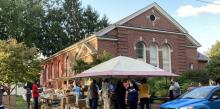
In response to the pandemic, Rehoboth church members in Reading, Pa., wanted to reach their neighboring community. After assessing community needs, Catrice Davis-Ford, Rehoboth’s Adventist Community Services leader, proposed relaunching the church’s food pantry.
Davis-Ford discovered Helping Harvest, an organization that partners with churches for food distribution. To spread the word about the relaunch, members shared flyers within a five-mile radius and began preparing for the COVID-safe initiative.
Church members distributed food on the church grounds, making it safe and easy for individuals to pick up their pre-packaged boxes and keep the line moving. The meals included enough food for a family to eat for two weeks.

“Behold, I stand at the door and knock. If anyone hears My voice and opens the door, I will come in to him and dine with him, and he with Me” (Rev. 3:20, NKJV).
To me, this verse is one of the most personal, heartfelt invitations in the Bible. So often we think of Revelation as the book about the antichrist, the mark of the beast, or the seven last plagues. But first and foremost, it is a book where Jesus patiently waits for us to surrender our hearts to Him so that He can love and lead us.

 “Blessed are you when people insult you, persecute you and falsely say all kinds of evil against you because of me. Rejoice and be glad, because great is your reward in heaven” (Matt. 5:11–12, NIV).
When I was a kid, I used to firmly say I’d be willing to bear persecution— and even die for Jesus. These verses, spoken by Jesus, touch me personally and give me courage to be a witness for Him—no matter the consequence.